Sunday, May 24, 2015

Hungary - Budapest

We sailed into Budapest on the final morning of the cruise, and docked under the historic Chain Bridge. We bid a fond adieu to our crew, and set off for a Viking tour of the city. We started with the hilly Buda side of the river, exploring the Castle District, Matthias Church, and Fisherman's Bastion.

Crossing back over the Danube to the Pest side, we visited Heroes' Square and drove some areas in southeast Pest, before arriving at the Central Market Hall. At this point we tipped our guide and kindly said our goodbyes, electing to find our own way to the hotel and further explore the city.

The Market did not disappoint, and we shopped and enjoyed some Hungarian favourites for lunch, washing them down with fresh local strawberries. We strolled the Vaci utca pedestrian area and found our way eventually to Elisabeth Square and Le Meridien hotel, our home for two nights. We were delighted to find our hotel was very nice with a view of the park, but also very central to just about everything.

Even better, right across the park was the MAV train station office, to firm up our future travel plans, and a "Prima" grocery store for snacks and beverages. Great place to spend some Hungarian forints.

We walked the well-known Andrassy Avenue and found ourselves dining at Porto di Pest on a quiet boulevard, sampling several Hungarian dishes including a rather good goulash soup.

The next day we spent entirely walking the city, across the Chain Bridge and back, up to the Margaret Bridge and across to Margaret Island, then back to Pest along the river bank. We visited the haunting Shoe Memorial, in memory of one of the final atrocities of the Second World War. With the Nazis retreating, Hungarian sympathizers (the Arrow Cross) lined up Jews on the riverbank and took their shoes (to sell), and then shot them into the river. As if it could be worse, apparently they would also tie people together to save bullets - killing one and drowning another with sadistic efficiency.

After a long day of exploring this great city on foot, shopping and dining, we enjoyed a final meal at Es Bistro just behind the hotel. We also enjoyed running into many new friends from the ship, as we were all staying at the same hotel and visiting many of the same sights.

Szechenyi Chain Bridge from the Aegir docked on Pest side

Crossing the Erzsebet (Elisabeth) Bridge from Pest to Buda

Tunnel to the Chain Bridge

Chain Bridge from Buda side

Matthias Church on Buda Hill

Busy day at the cathedral

Buda Castle District

Fisherman's Bastion

View to the right from Fisherman's Bastion

And the equally stunning view to the left

Hungarian Parliament

Heroes' Square

Mighty Magyar Chieftans

Central Market Hall - three floors of vendors

Enjoying some local strawberries across from the market

The view of the park from our room at Le Meridien

St. Stephen's Basilica

Opera House on Andrassy Avenue

Sights near the hotel

Walking the iconic Chain Bridge
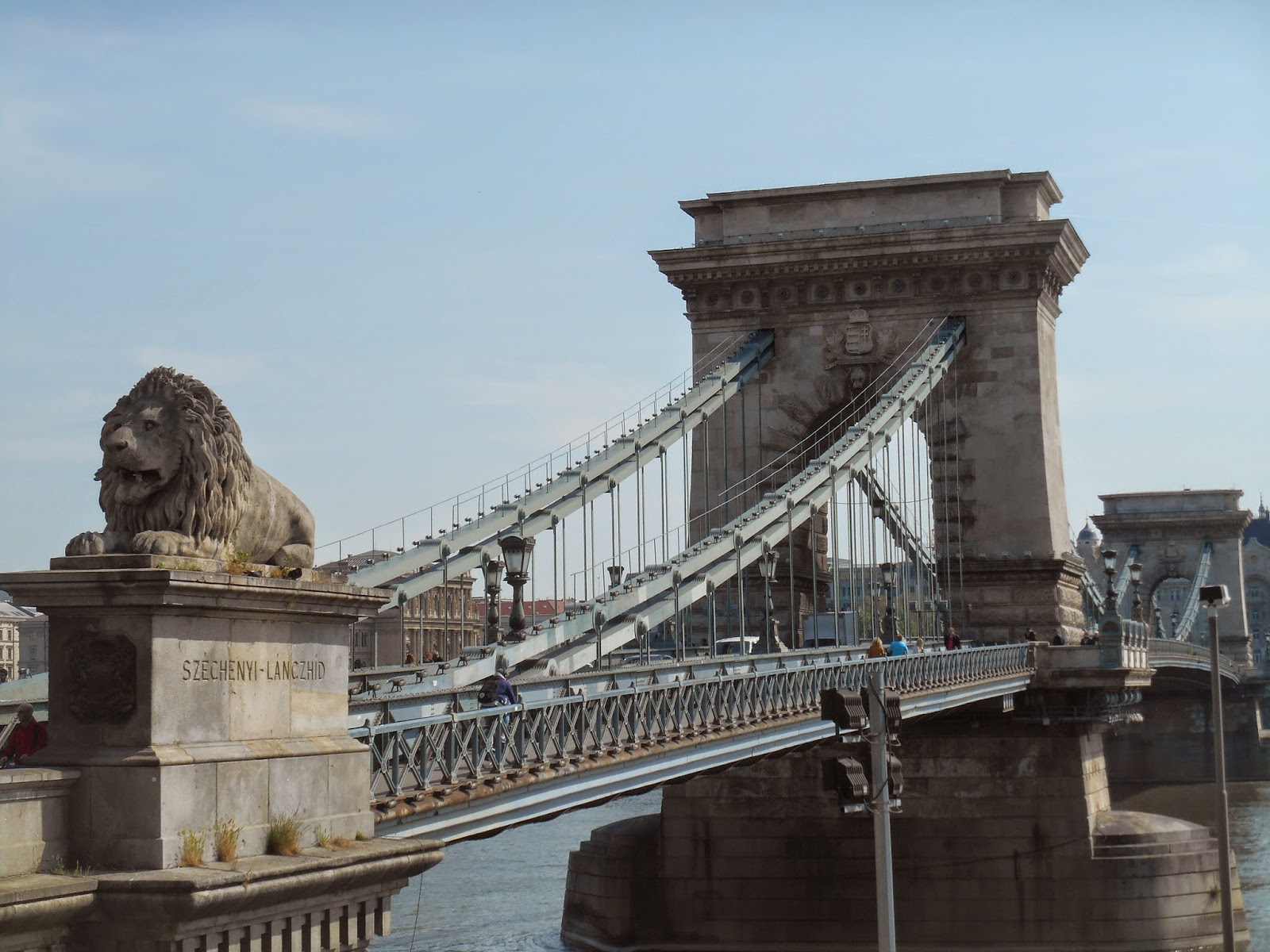

Aegir docked under the Chain Bridge

Shoes on the Danube - a chilling monument

Back of Parliament

Vaci utca shopping street

Margaret Island in the middle of the Danube

Hungary - Kalocsa

Our entry into Hungary involved a very early morning "face check" at Mohacs, during which most guests stumbled bleary-eyed in their PJ's before a friendly team of border guards. Some returned to their beds, but we stayed up and enjoyed a coffee in rocking chairs at the bow of the ship as we sailed onward.

Our stop for the day was in a rural area, technically the river port for the town of Kalocsa (Ka-LO-Cha) some distance inland. By mid-morning we found ourselves at a horse farm outside town, home to a very spirited group of Magyar (Hungarian) Puszta cowboys, keeping alive the traditions from their nomadic Mongolian ancestry.

The degree of training and trust bond between rider and horse was immediately evident. We experienced a local cowboy snack (bread smeared with pork fat, onion and paprika) washed down with shots of various local fruit brandy as we enjoyed the show, which consisted of some demonstrations followed by a series of cowboy games. Our new friend Kelsey (aka Wine Girl) was even the subject of a very intimate public whip demonstration and courting ritual with one of the cowboys.

The Kalocsa area is also renowned for it's paprika, even within a paprika mecca like Hungary. We stocked up on some to take home, both the "edes" (sweet) and "csipos" (hot) varieties.

Following the horse show, we returned to Kalocsa for a tour of the old town square and cathedral, where we were also treated to a 20-minute classical music concert on the church pipe organ. Outside the cathedral, the statue of List Ferenc (aka famous yet local classical composer Franz Liszt) listened intently to ensure that each note was exact.

Back aboard the Aegir, our final night on the ship included a Farewell Dinner with Captain Istvan, now in his home country. We were also entertained by some local folk musicians. Our Hungarian server Melinda (she of the frequent and VERY full wine pours) also confided that she had eavesdropped on the musicians, who didn't realize she was Hungarian. Something about comparing the various female servers and their skills.....we'll stay classy and leave it at that!

We also received a nice gift from our new friends Anne and Leon from Kansas - during the cruise, Anne had knitted each of us a pair of wool socks! Maybe she was worried about us losing our feet to the brutal Canadian winters.....

 Fluid "Border" entry point into Hungary at Mohacs - pun intended as always

 Bridging the Danube

 Docked at Kalocsa

 Viking Aegir takes a well-earned break

 Hungarian Cowboy show

 Whip it good!

 Well-trained steeds

The rhythmic whip song continued through the performance!

 Sit Ubu Sit - Good Horse

 Cowboy games - knock the jug off the stump

 A sip of beer....followed by a race around the ring to see who spills the least!

 Crazy balance and arm and leg strength...especially at full speed!

 Archiepiscopal Palace

 Kalocsa Cathedral

Liszt Ferenc ponders a mental "note"

Saturday, May 23, 2015

Croatia

The next morning we sailed into Vukovar, Croatia, a town rather devastated by fighting between Serbia and Croatia in the 1990's. Our guide estimated that 90% of the town had been destroyed in the War of Independence. Local Customs officers required a passport "face check", after which we were entertained by a Slavonian tambura band playing local folk music on several sizes of stringed tamburica.

A short bus ride took us to the city of Osijek on the River Drava, and to the nearby village of Bilje, where we enjoyed one of the cultural highlights of the entire trip. Viking had arranged to drop off small groups of passengers to enjoy coffee and dessert with a number of local families, affording a glimpse into "real" life and the opportunity to ask questions.

We visited the Martinov family, an extremely kind older couple who welcomed us into their home, answered our questions, shared their food and showed us their gardens. We were aided in translation by a local university student. Their house had also been completely destroyed in the war, and their only son had been involved in the fighting, but thankfully survived. A very different and heartwarming experience.....and I don't just mean the shot of rakia they gave us!

Back in Osijek, we toured the old city and fortress, and were treated to a musical performance in the local church. Our one criticism was that we had very little free time (OK, none) to explore either Osijek or Vukovar on our own, beyond the tours themselves. No chance to look for a music store that might sell tamburica! We did manage a very quick beer at a riverside bar stand before we jumped back on the ship for the daily briefing and then dinner, as the Aegir cast off and slithered north now towards Hungary.


 Vukovar, Croatia

 Vukovar water tower - a memorial to the war with Serbia

 Local tambura band entertaining in the Aegir lounge

 Martinov home in Bilje

 Touring their gardens

Croatian hospitality

Scenes from Osijek


Cro-Cro-Cro(atia) your boat....

Sunset over the Danube
Friday, May 22, 2015

Serbia

The next stop along the Danube was on the Serbian side, at the capital city of Belgrade, aka the "White City". The site of many a conflict over the centuries, the strategic city had most recently seen strife in the 1990's during the bloody civil war and ethnic cleansing that wracked the former Yugoslavian states, before the UN put an end to the fighting and seven new countries were born.

The city has apparently been destroyed 44 times, and changed hands 60 times over the years. All things considered, they still seemed like a pretty happy bunch.

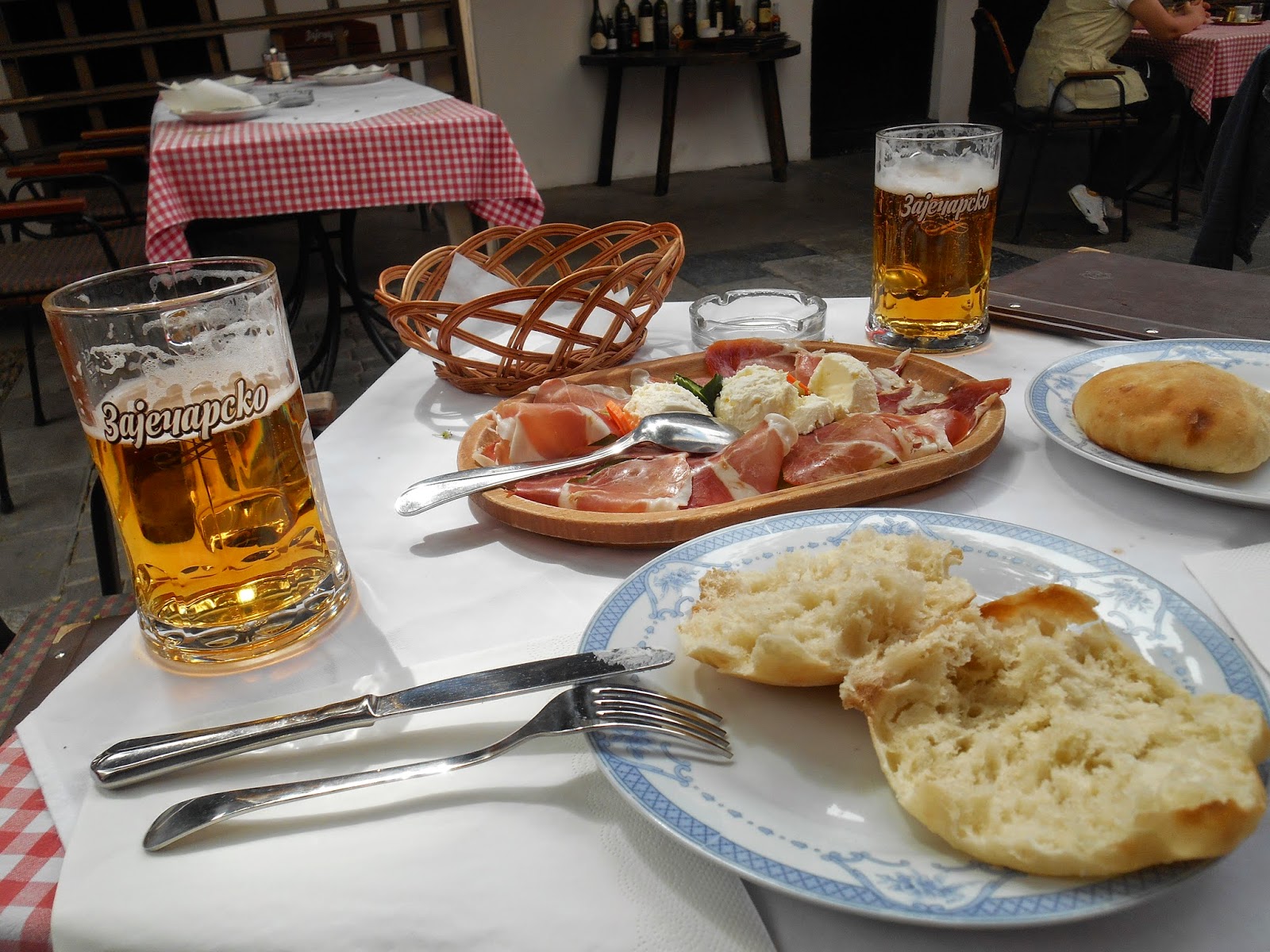
We were treated to a driving tour of the new and old city, followed by a stroll through Kalemegdan Park and Belgrade Fortress, and the prominent promontory overlooking the rivers. Afterwards, we ditched the free ride back to the boat and chose instead to walk the old town some more, and enjoy a nice lunch at the historic '?' Tavern. Switching to yet another currency, we paid for our lunch with dinar. Ahem.

Back aboard the Aegir, we enjoyed some fireworks over the city before pushing off into the quiet darkness and away from the illuminated facade of the imposing fortress.

Viking Aegir docked alongside Viking Embla on the Sava River

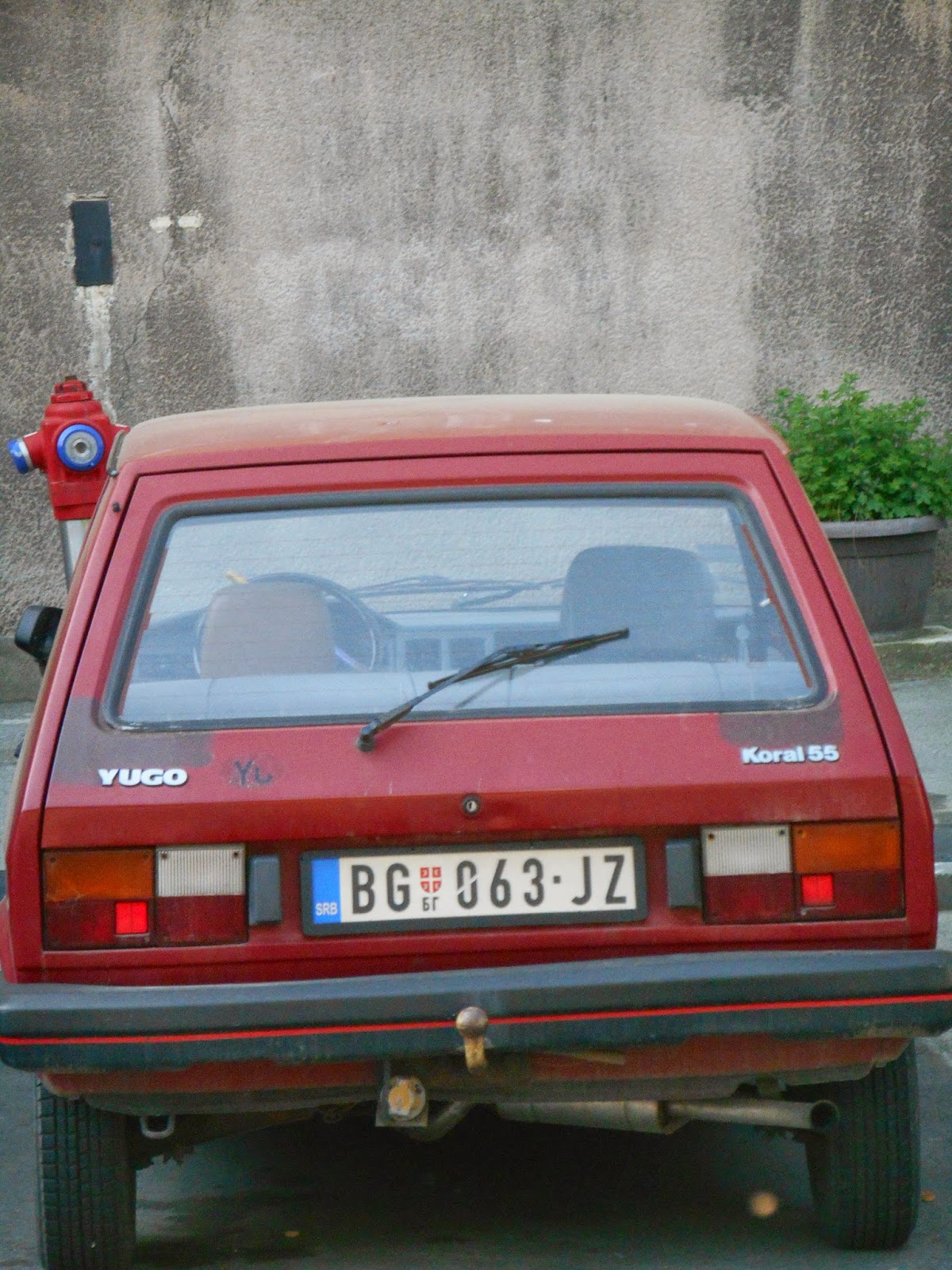
 Yugo!

(courtesy of our Serbian tour guide Milos)
Q: Why do they put rear window defrosters on Yugos?
A: To keep your hands warm while you are pushing them! 

Saint Sava Cathedral


Military HQ bombed by NATO in 1999 and left as a reminder

Draft Lav and pizza snack

Belgrade Fortress

Defending the confluence of the Sava and the Danube

Obligatory shopping in the pedestrian zone

Lunch at The '?' Tavern


Serbian Salad

Courtyard Dining

We had to cross through the Embla to come ashore!

The Serbian flag flies over the Aegir

Belgrade by Night